


Teal Partners has grown in ten years from four people in a loft into a software company of more than seventy employees, without traditional management layers, without raising start-up capital, and without losing its focus on substance.
Co-founders Jelle Huygen and Koen Denies look back on ten years of Teal Partners and explain how self-management, collegiality and a focus on quality have proved to be the pillars of strong, stable growth.
Jelle Huygen: “We started with four people in a small loft. Today, we are more than seventy. We have remained true to our organisational principle of self-management. It requires constant attention, but despite our rapid growth, we have not been tempted to add extra management layers or central control.”
Koen Denies: “Our starting point has remained the same. The word ‘partners’ is not in our name by coincidence. Collegiality is extremely important. That sense of: we are doing this together. Is everyone on board? Does everyone feel good in their job? Drive and humanity go hand in hand. That remains our essence.”
Koen Denies: “We didn’t have a grand master plan, but we did have a clear vision of what we wanted to do. For example, it was never our ambition to win as many projects as possible. A new assignment has to make sense in terms of content and fit the way we work. Sometimes we say no.”
Jelle Huygen: “We still approach projects in the same way as we did ten years ago. New opportunities have to be ambitious. They have to make an impact. We explore how digitalisation can offer a solution to the customer’s challenges and opportunities. If the plans have already been finalised and only need to be executed, then we are not the right party.”
Jelle Huygen: “Our approach and our technology can be used perfectly well in a wide range of sectors, and at first we approached the market broadly. But in practice, we noticed that our domain knowledge and our background — Jelle and Koen met while working at SD Worx, ed. — gave us an advantage in payroll and HR. That is where we made the biggest difference, certainly compared with other IT companies.”
Koen Denies: “That specialisation gave us the opportunity to become active internationally. It was not a carefully devised strategy, but grew organically from the projects we were doing. We broadened our scope by growing alongside our customers.”
Jelle Huygen: “In the beginning, our revenue came exclusively from projects. Quite early on, the idea emerged to complement projects with licences, in order to bring more continuity and predictability to our revenue model.”
Koen Denies: “Many project-based companies dream of launching their own product one day. But that step is not straightforward. A product organisation works differently: you have to invest yourself, find customers yourself and work with your own resources. But with Youbo, we have succeeded in doing that since 2024.”
Jelle Huygen: “We started with two projects that SD Worx entrusted to us: BudgetModule and Tax TPI, tax calculation for expats. At the time, almost all of our revenue came from them. That has, of course, changed, but their importance has remained significant. The mutual trust has only increased, including at the highest level. The biggest turning point was, of course, their entry as a shareholder in 2021.”
Koen Denies: “Initially, the plan was to work fifty-fifty for other customers, but the SD Worx projects became increasingly ambitious. When the calculation engine we had developed within Teal Partners proved capable of renewing payroll from the core, we became part of a new and much bigger story. With the new real-time payroll software that is now being rolled out across Europe, we are close to the strategic core.”
Jelle Huygen: “Our growth in employee numbers has always followed the projects. We have never hired people in the hope that work would follow later. First the project has to be there, then we recruit. As a result, you cannot suddenly explode from ten to a hundred people.”
Koen Denies: “From the very beginning, we have grown solely with the money we earned. Not with raised capital that we then burned through. That is not who we are. We waited with our own remuneration and gave priority to investments in the company, for example making sure there were laptops and desks for everyone.”
Jelle Huygen: “From day one, we were in the black. That makes the growth less spectacular, but much more stable. It also fits better with the culture we wanted to build. We are not afraid of risk or entrepreneurship, but you only spend what you have earned.”
Jelle Huygen: “Of our people and our projects. Every year, we list what we have achieved, and it is always impressive. All our projects are success stories. In IT, that is not a given. We can really be proud of that.”
“That is only possible because of the group of people we have brought together. We have built an environment where strong developers like to stay. Many developers want to keep working substantively on software, but in traditional companies experienced developers are often pushed towards management. Not here, and that means we attract people who genuinely enjoy building software. You can see that in the quality.”
Koen Denies: “We are also enormously grateful to our customers and partners. We have learned so much from the people around us. From customers who share their strategy and challenges with us. From partners who involve us in their thinking. Teal Partners is not an island.”
Jelle Huygen: “Absolutely. People think self-management only works in small companies, with ten or fifteen people. But now that we are seventy, it is actually easier to integrate new people, because everyone helps. It has indeed enabled us to grow more easily.”
Koen Denies: “Self-management only works in a decentralised way, with smaller teams that are given a lot of responsibility. That model is actually highly scalable, even though people tend to think the opposite. It does require ongoing attention, and the vision and expectations have to remain clear to everyone.”
Jelle Huygen: “In the end, we noticed that the best way to distribute tasks is not to add an extra layer, but to look at which people within the company get energy from certain tasks and let them take those on. That way, you distribute work more naturally and in a more decentralised way.”
Koen Denies: “We remain convinced that the better solution comes from the team, even if that requires more consultation and sometimes creates friction. In difficult moments, the temptation is strong to make faster decisions through a few people at the top. But then you lose collective intelligence and support. As happens in traditional companies with project managers or a middle layer of managers.”
Koen Denies: “Yes, and it confirmed that it does not work for us. You quickly felt that information was becoming centralised and that the dynamism was disappearing from the teams. We also toyed with the idea of adding a third person alongside Jelle and me. But that would not work. We understand each other without many words or much discussion. You cannot just change that.”
“The tasks we can no longer carry ourselves are taken up by the team. They are best placed to do so. We still both conduct all feedback conversations with every employee ourselves. That is intensive. But we do not want to create distance. If you delegate evaluation, you implicitly create hierarchy, and that is not what we want.”
Jelle Huygen: “For us, it is not about writing code faster. Our starting point is: does AI help us build better software? The impact is enormous, not only on development but also on design and analysis. AI is changing the way we work. It can accelerate development, but it also brings major challenges in terms of maintainability, security and consistency.”
Koen Denies: “AI raises new questions. What skills do we expect from developers today? How do we make sure people remain owners of what they build and do not blindly trust generated output? That is especially important for juniors. They have to develop the foundations needed to assess AI properly.”
Jelle Huygen: “There is also an impact on the financial model of software companies like ours. If AI speeds up tasks, we have to think about what we value: time, expertise, quality, responsibility, results. That is not an easy exercise, but it is an interesting one.”
Koen Denies: “We experiment with tools, but also with concrete use cases in customer environments and in our own products, such as Youbo. Think of applications in customer support or salary analyses. Not because we necessarily want to ‘do something with AI’, but because we want to understand where it genuinely adds value.”
Jelle Huygen: “I hope that in ten years’ time we will still be working in a decentralised environment, with people who take responsibility and are just as curious and engaged as they are today. Not necessarily with a specific number of employees or a particular revenue figure, but still in the same spirit.”
Koen Denies: “That it is still enjoyable. That may sound simple, but it is important. That we can still think along with our customers, learn from them, build things for them and help shape their future. That is what we love doing most.”
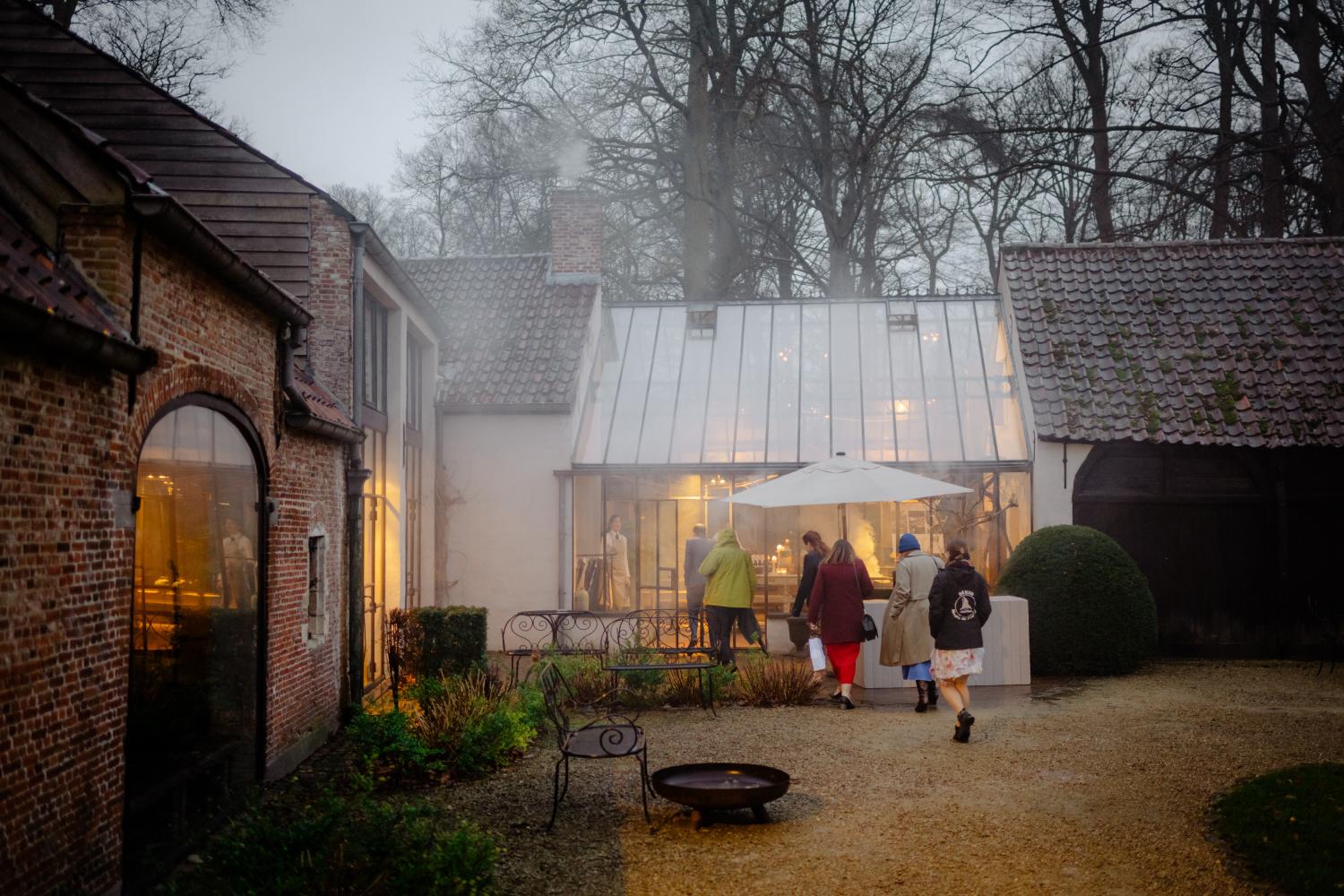
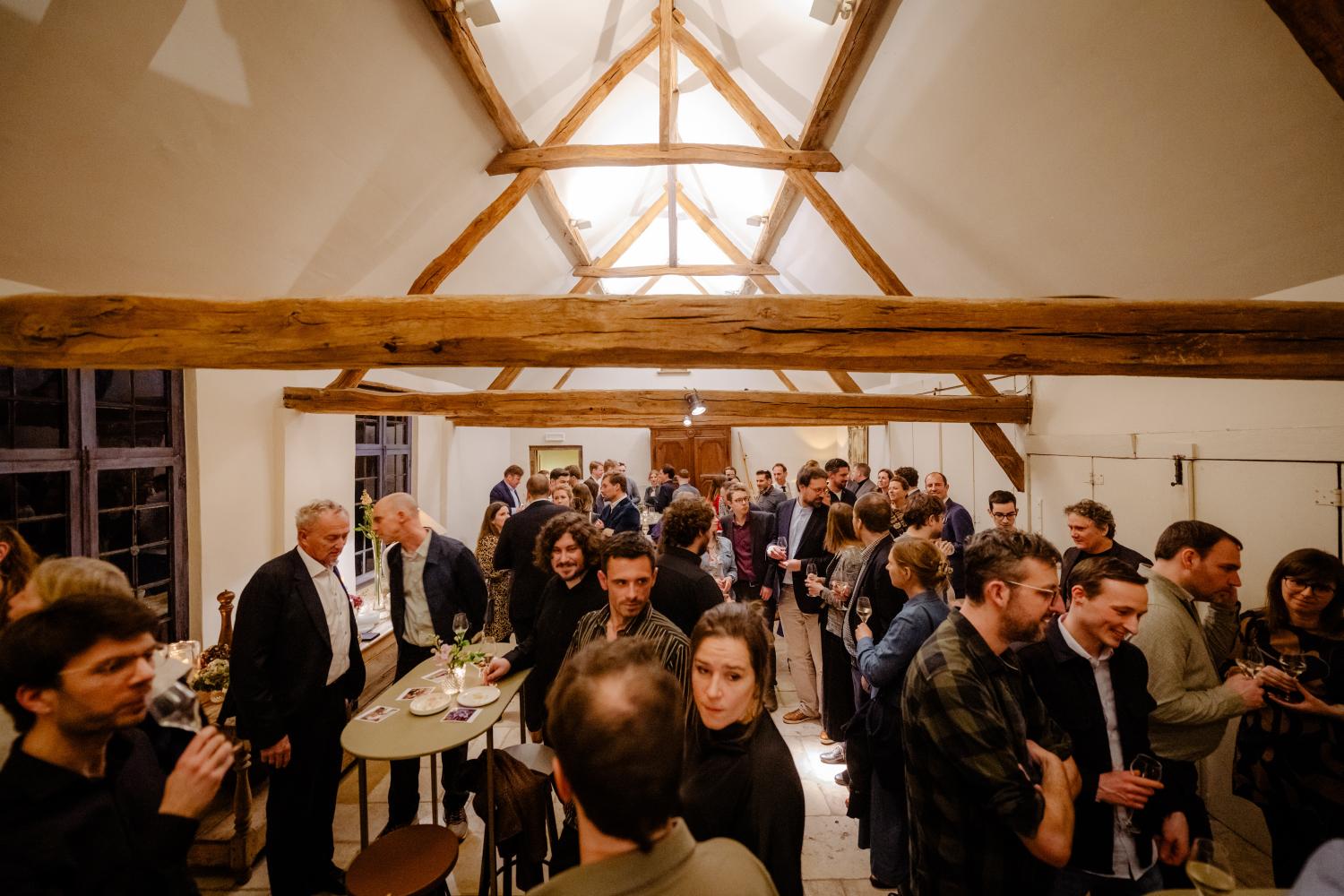
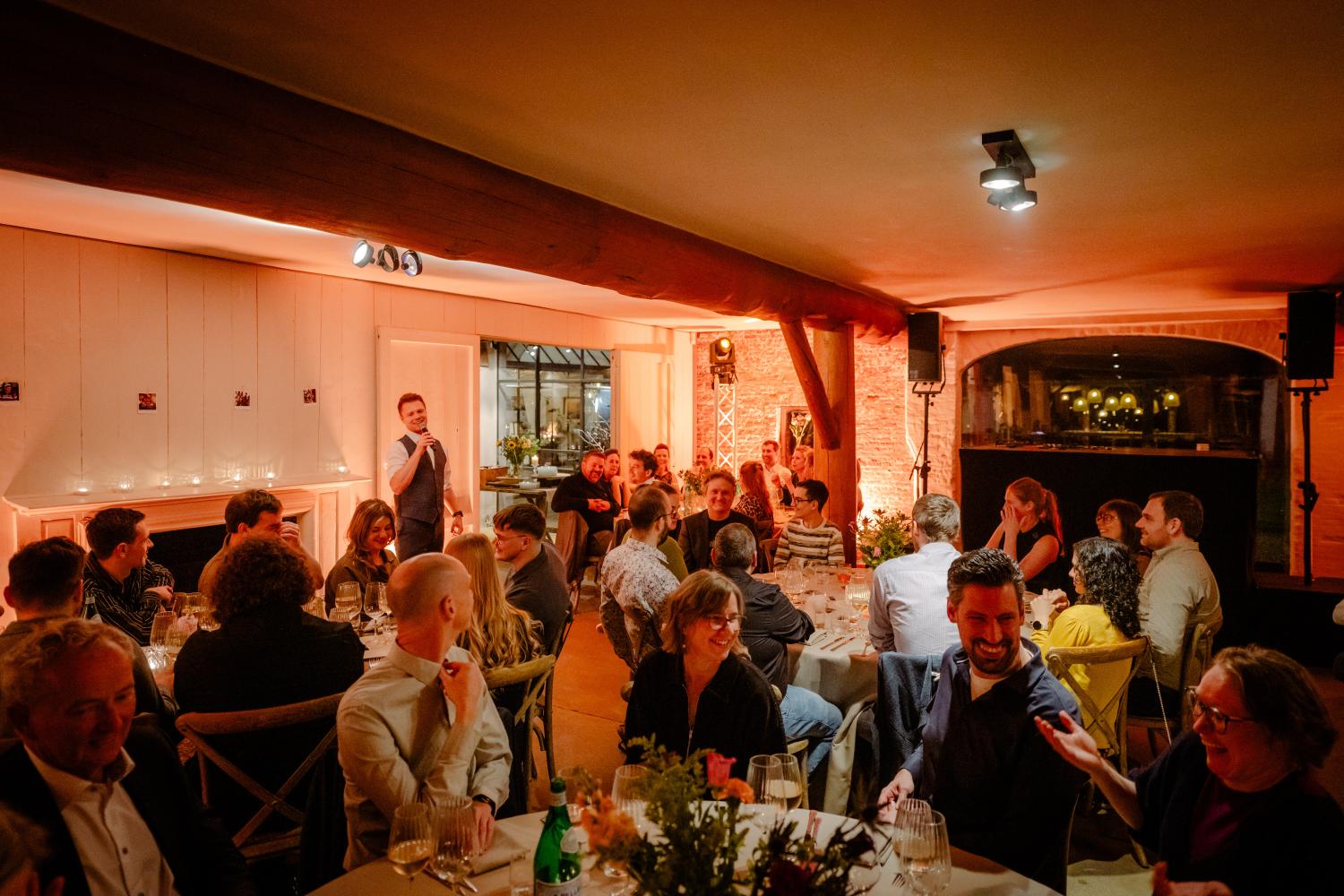
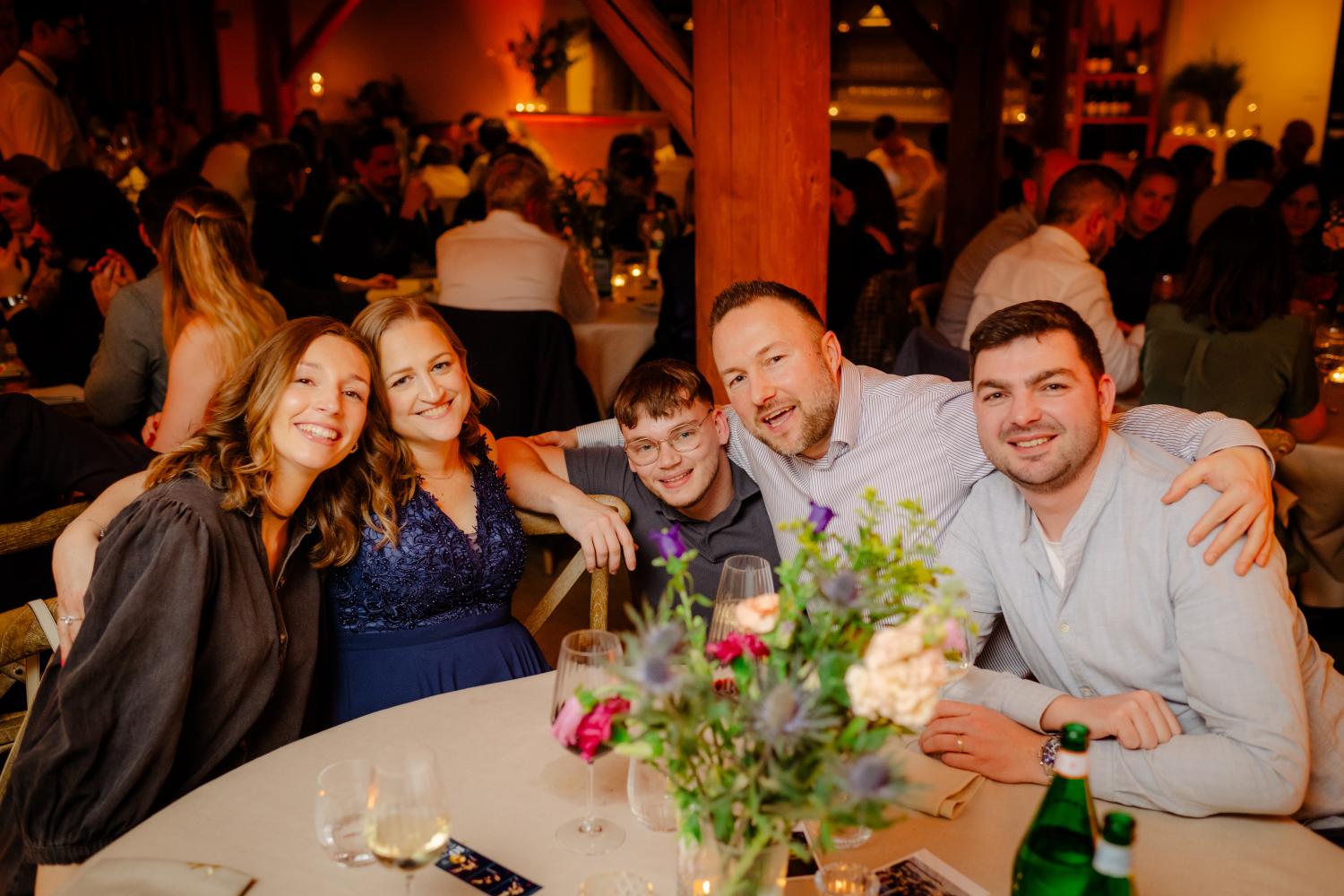
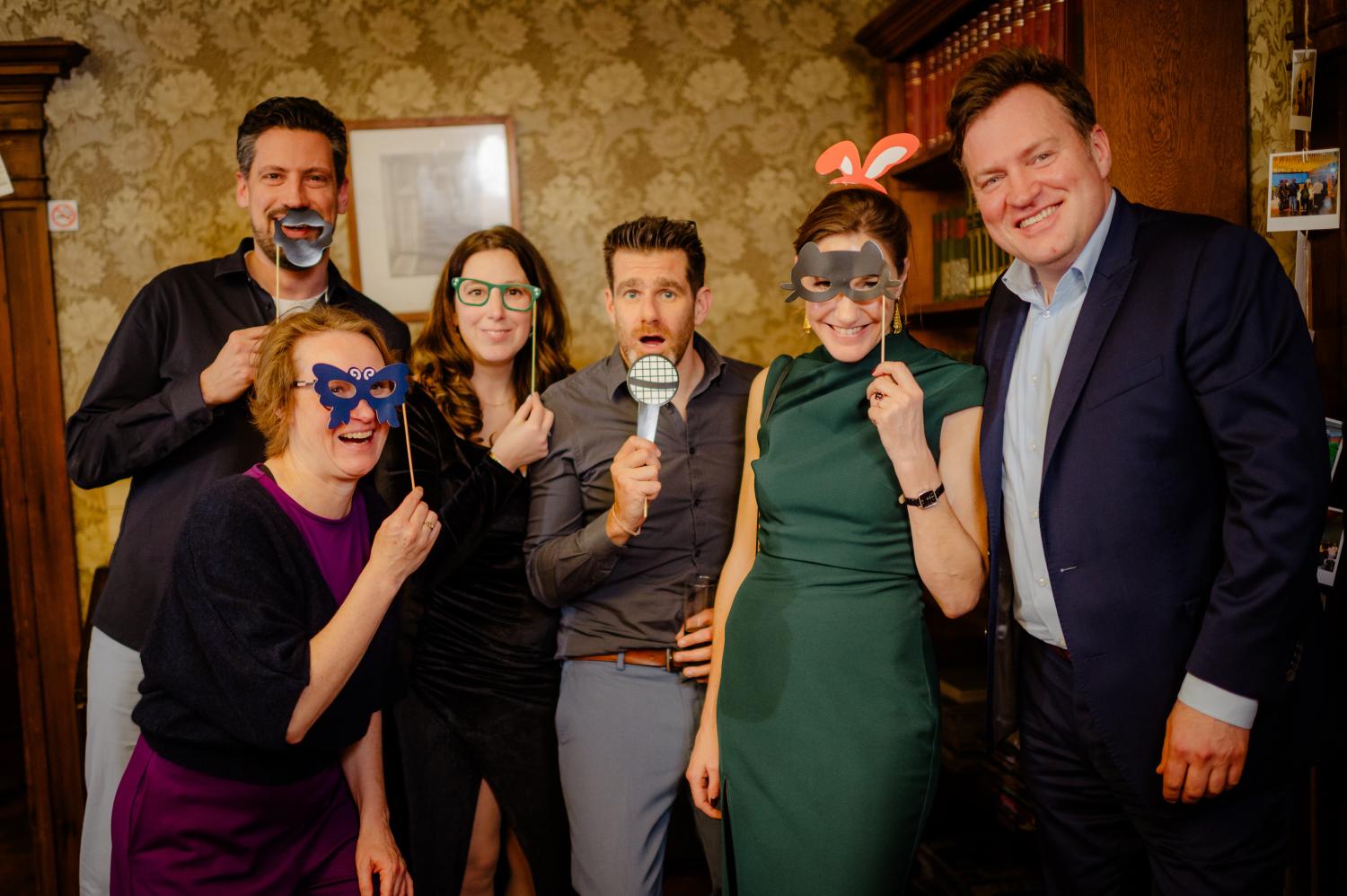
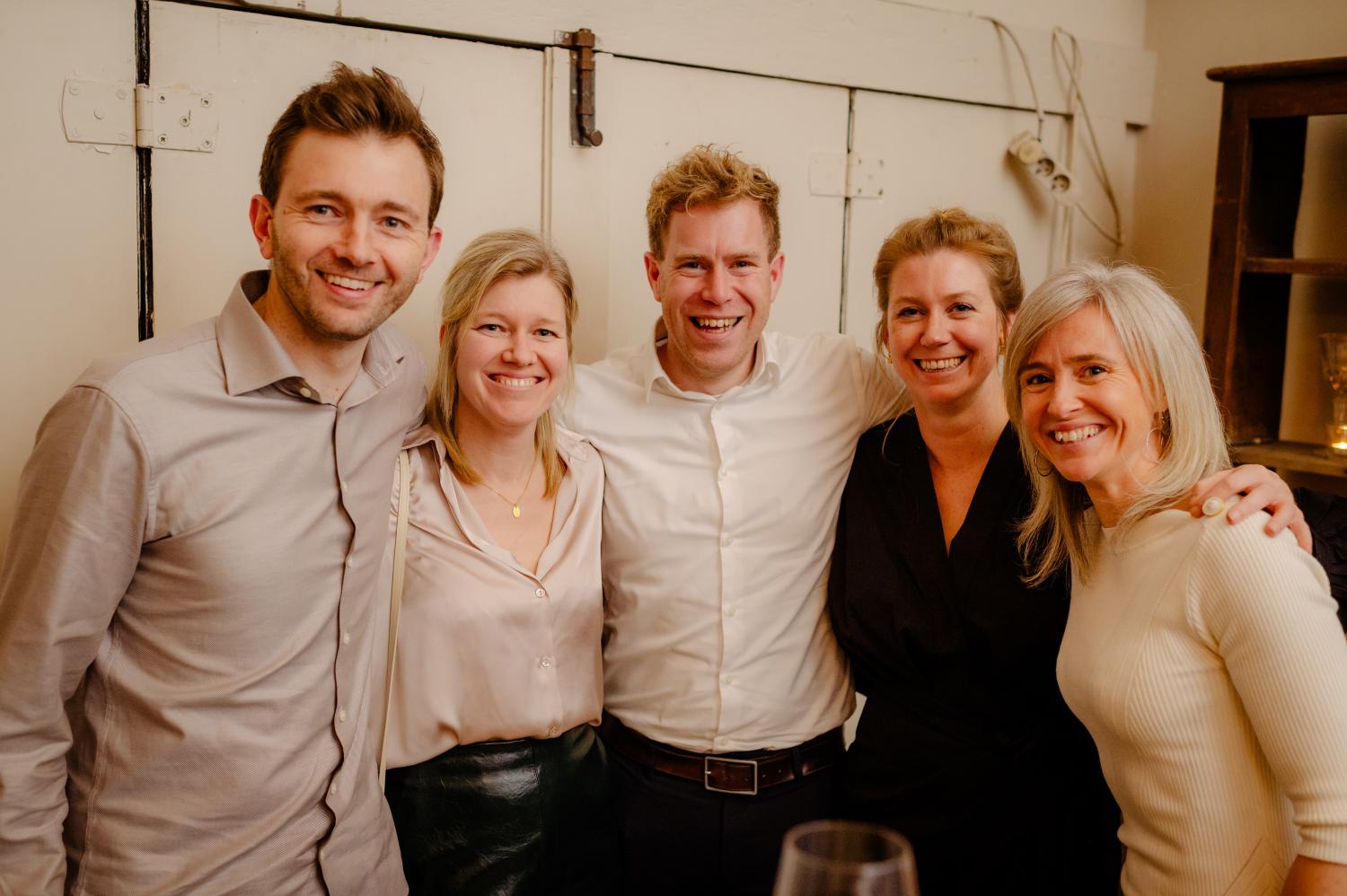
Impressions of the celebration marking ten years of Teal Partners in Schilde, captured by photographer Stein Van Der Looij.


